THE BRIEF
No. 02 Karl-II
April 1, 2026
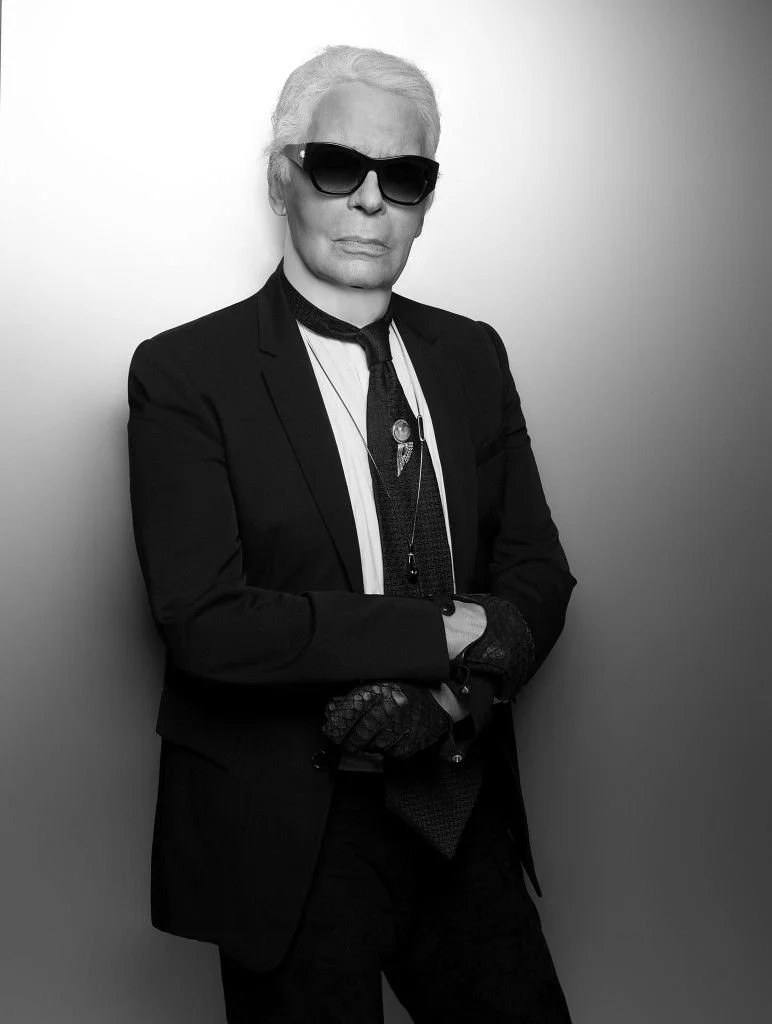
On April 1, a fake Chanel press release circulated announcing Matthieu Blazy’s departure. His replacement: Karl-II — an AI system trained on Lagerfeld’s archives, taste, instincts, and output. Blazy has not left. He is very much at Chanel. The post was fiction.
But it spread as fact. And that is the signal.
Not because people are gullible, but because the premise felt structurally possible. When a joke travels this fast, it is not misinformation. It is a latent truth looking for a container. The hoax worked because the industry has already been thinking it — just not saying it out loud.
The question the post planted — and quickly defused — is the one the luxury system has not yet answered: what happens when the genius is gone and no human replacement is adequate?
Lagerfeld ran Chanel for 36 years. He was not a creative director. He was an operating system — a codified sensibility so total, so internally consistent, that it could generate output across categories, decades, and contexts without losing coherence. Viard preserved the surface. Blazy is now reactivating the logic. Both solutions depend on a human being present to interpret.
Karl-II proposes something else: not interpretation, but institutionalisation.
This is luxury’s oldest anxiety, reframed in contemporary language. Every great house has faced the same structural problem — how do you separate the code from the body that carries it? The answer has always required another exceptional human. Karl-II asks whether that is still the only answer.
Beauty has not yet had this conversation. It should.
The category is built almost entirely on embodied authority — the founder’s instinct, the expert’s eye, the creative director’s taste. When that person steps back, is acquired, burns out, or moves on, the intelligence leaves with them. What remains is a brand without a nervous system. The shelf stays. The logic disappears.
Somewhere, quietly, someone is working on this problem for beauty — not an AI trained to mimic a personality, but something more precise: a system that encodes a way of reading — categories, tensions, hierarchies of value, aesthetic logic — and makes it transferable, durable, and operable beyond the individual who originated it.
The genius is not the work. The genius is the framework that produces the work. That framework can be written down, structured, and turned into code.
The signal: The joke became news because the industry recognised the problem. Blazy is still at Chanel. But the question that circulated on April 1 will not stay fictional for long.
Paris Macro Beauty — PMB Edit
Beauty. Curated Like Fashion.
THE BRIEF
No. 01Fatigue as a Position
Paris Fashion Week, Fall-Winter 2026-2027
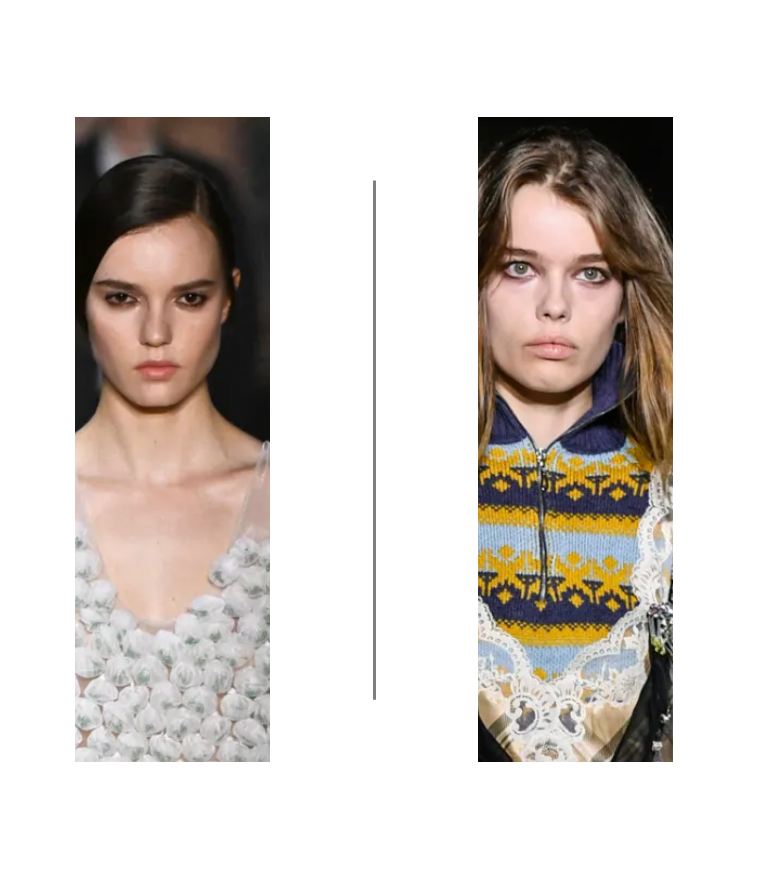
At Schiaparelli, Pat McGrath described her brief in four words: "never too pristine." Skin illuminated but not perfected, eyes softly smudged, left open rather than defined. Guido Palau gave the hair the same instruction — sleek low buns with deliberate flyaways, held together but only just.
At Victoria Beckham, Lucia Pica pressed chocolate brown kajal along the lash line with a fingertip — blurred, imprecise by design.
At Rabanne, liner was diffused rather than drawn. Across the Paris shows, the face read the same way: fatigued, but intentionally so.
This is the defining beauty gesture of Paris Fashion Week FW26-27. Not the tired look — the carefully constructed tired look.
And that distinction is everything. Because fatigue, on the runway, is not a condition. It is an aesthetic argument. The face that looks like it has not slept, has not corrected, has not tried — was produced with eyeshadow quads, kajal liners, and a precise application sequence. The exhausted finish had a construction brief. Fashion is not abandoning the idea of beauty. It is redefining what a beautiful face is allowed to look like — and calling that redefinition freedom.
The beauty industry will follow. It always does. Skincare will promise skin so good it passes for bare. Makeup will sell the smudge. Haircare will sell the texture. The fatigue will be bottled, named, and placed on a shelf.
The signal: The most interesting thing about the tired face this season is not that it looks undone — it's that it isn't. Fashion proposes fatigue as liberation. Beauty will supply the tools to simulate it. The standard has shifted. The structure has not.
Paris Macro Beauty — The Brief is a short, sharp observation at the intersection of beauty, fashion, and culture.
Beauty. Curated Like Fashion.