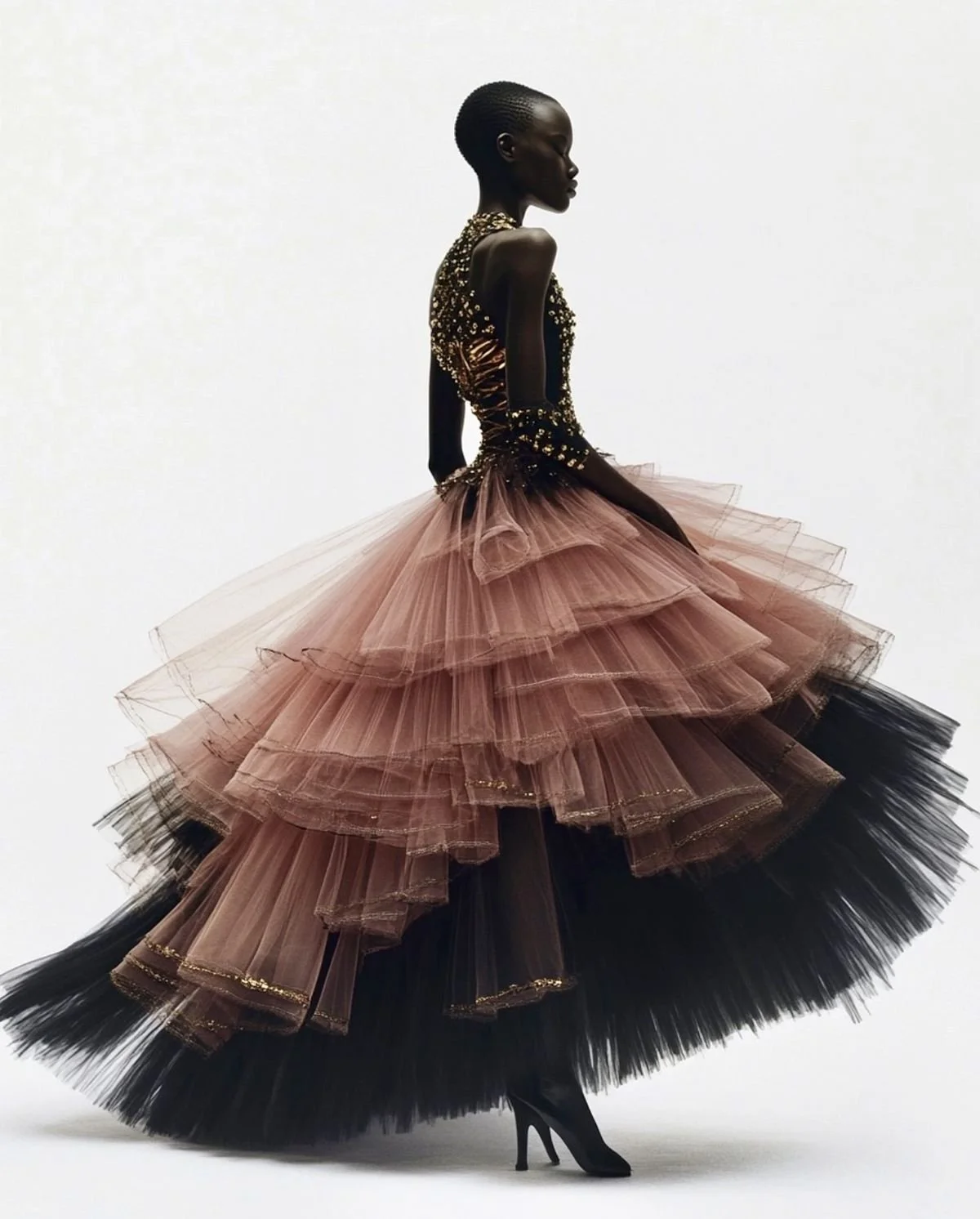
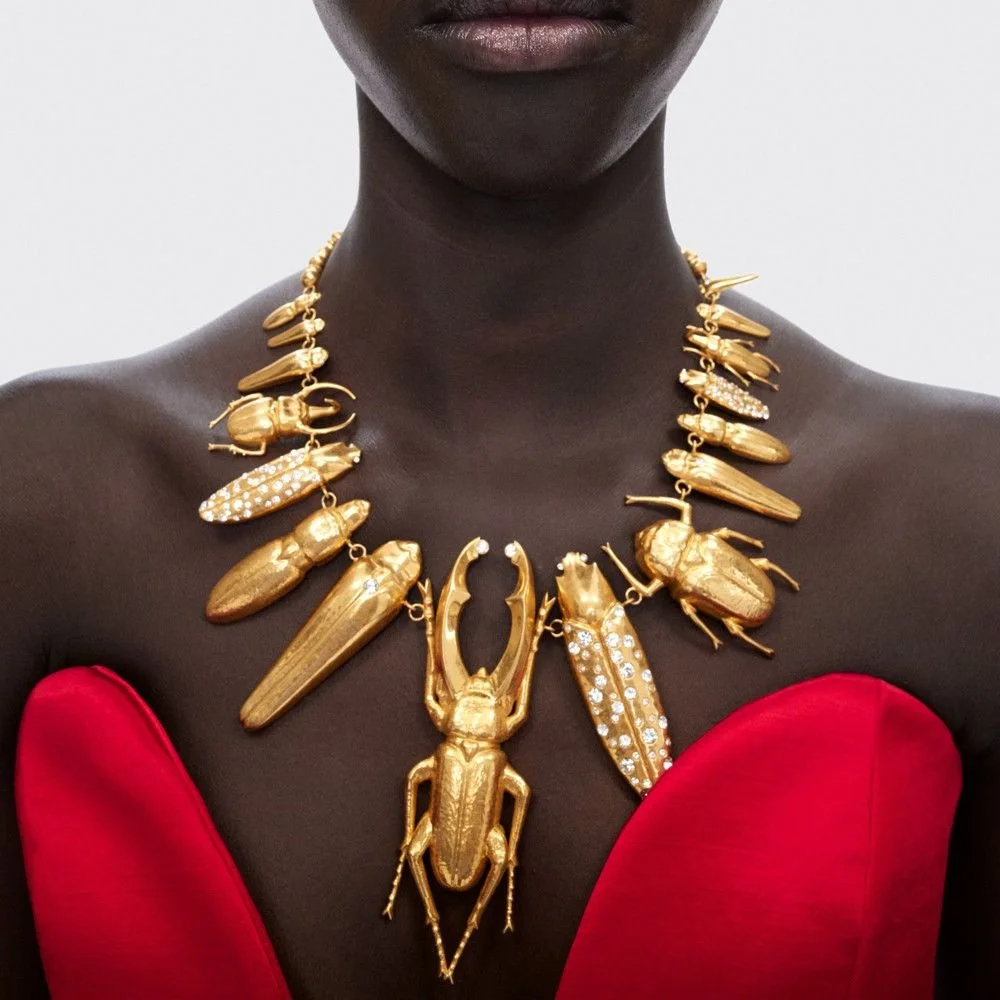
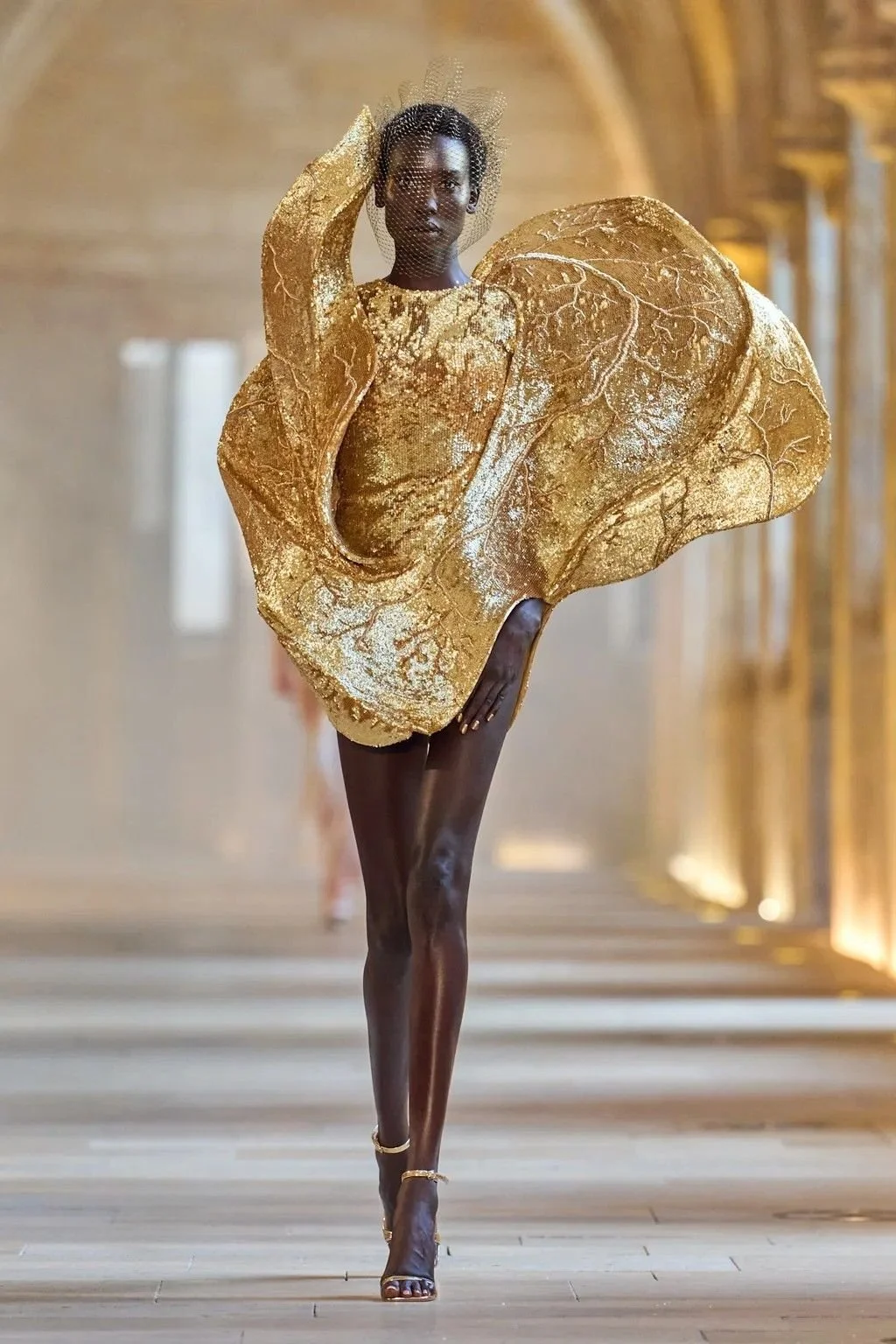
What Haute Couture Still Allows - And Beauty No Longer Does
On opacity, justification, and the tension reshaping makeup and haircare
Editor’s Note
Haute Couture exists under a different contract than most creative industries.
It is allowed to be difficult, opaque, and unresolved.
This piece looks at what happens when that logic collides with contemporary beauty — an industry increasingly shaped by transparency, proof, and justification, and why this tension is felt most acutely inside fashion houses that also operate beauty divisions.
—
Paris Macro Beauty
Each January in Paris, Haute Couture returns with a quiet authority.
Not to scale.
Not to be worn by many.
Not to justify itself.
Couture exists without asking permission.
Its value is not measured by performance, optimisation, or adoption. It does not need to prove relevance or utility. It is allowed to exist before it is useful, and sometimes without ever becoming useful at all.
Watching couture this season, a contrast became impossible to ignore.
Beauty no longer allows this freedom.
The obligation to justify
In contemporary beauty, existence must be earned.
Every product must solve a problem.
Every formula must demonstrate efficacy.
Every launch must articulate benefit, proof, and outcome.
This logic did not emerge by accident. It is the result of real progress: scientific advances, regulatory rigor, and a more educated consumer. Beauty learned to speak the language of transparency, and it worked.
But as this language became dominant, something narrowed.
As performance became non-negotiable, imagination receded.
As justification became mandatory, intuition lost legitimacy.
As usefulness became the entry price, beauty surrendered the right to exist on its own terms.
Couture reminds us that this was a choice, not an inevitability.
Fashion houses at the fault line
This tension is perhaps most visible inside fashion houses that also operate beauty divisions.
These maisons instinctively protect worlds where pieces exist without justification, where difficulty, excess, and singularity are not flaws but signals of intent.
Yet their beauty products operate under a different expectation.
Makeup and haircare must perform, comply, reassure, and scale.
They must explain themselves in ways couture never has to.
As a result, many fashion-led beauty houses live in a quiet contradiction:
creative direction rooted in mystery and authorship
product narratives anchored in efficacy, transparency, and reassurance
Couture can afford to be opaque.
Beauty is expected to be transparent.
The distance between these two logics is widening, and increasingly difficult to reconcile.
Makeup: when expression became optimisation
Makeup was once the closest bridge between fashion and beauty.
It was seasonal, theatrical, emotional.
It did not need to improve the skin. It did not need to last. It did not need to justify itself.
Today, makeup increasingly borrows the codes of skincare:
complexion framed through treatment language
finishes rationalised through wear metrics
colour softened into universality
Everything must flatter. Everything must perform. Everything must make sense.
What disappears is not creativity, but permission,
the permission to be excessive, unresolved, or unnecessary.
Couture does not ask whether something is flattering.
It asks whether it is intentional.
That distinction matters.
Haircare: when care replaced character
Haircare has undergone a similar shift, perhaps more quietly.
Once shaped by style, ritual, and salon culture, it is now largely narrated through repair, balance, and optimisation: strength, shine, scalp health, fibre integrity.
These advances are essential.
But they also impose a singular narrative: that hair exists primarily to be corrected.
Couture offers a different model.
Hair in couture is not always healthy.
It is sculpted, constrained, exaggerated, transformed.
Its role is not to be managed, but to contribute to a vision.
When care becomes the only acceptable language, character fades.
What couture preserves, and beauty may need to reclaim
Couture survives because it operates under a different contract.
It is not required to:
be scalable
be repeatable
be explained
be optimised
Its legitimacy comes from authorship, not adoption.
This is what beauty has gradually lost, and what fashion-led houses feel most acutely.
Not a rejection of science.
Not a dismissal of efficacy.
But the reinstatement of a space where beauty can exist before it is justified.
The question ahead
Beauty today stands between two logics:
one that demands proof, performance, and reassurance
one that once allowed instinct, expression, and ambiguity
Fashion houses know both worlds, and feel the tension most sharply.
The question is no longer whether beauty can perform.
It is whether it can still imagine,
without immediately needing to explain why.
—
PARIS MACRO BEAUTY — Issue 02
What Haute Couture Still Allow - And Beauty No Longer Does